Human Geography
Preface
Most people have an understanding of what their own lives are like and know a good deal about their own neighborhood and perhaps even something of the larger city and state in which they live. Yet, even as the countries and regions of the world become more interconnected, most of us still know very little about the lives of people on the other side of our country, or in other societies, or about the ways the lives of those people connect to our own. To change the world, to make it a better place for all people, we need to understand not just our little corner of it, but the whole of it—the broad sweep of human geography that constitutes the larger world of which our small corners are just a part.
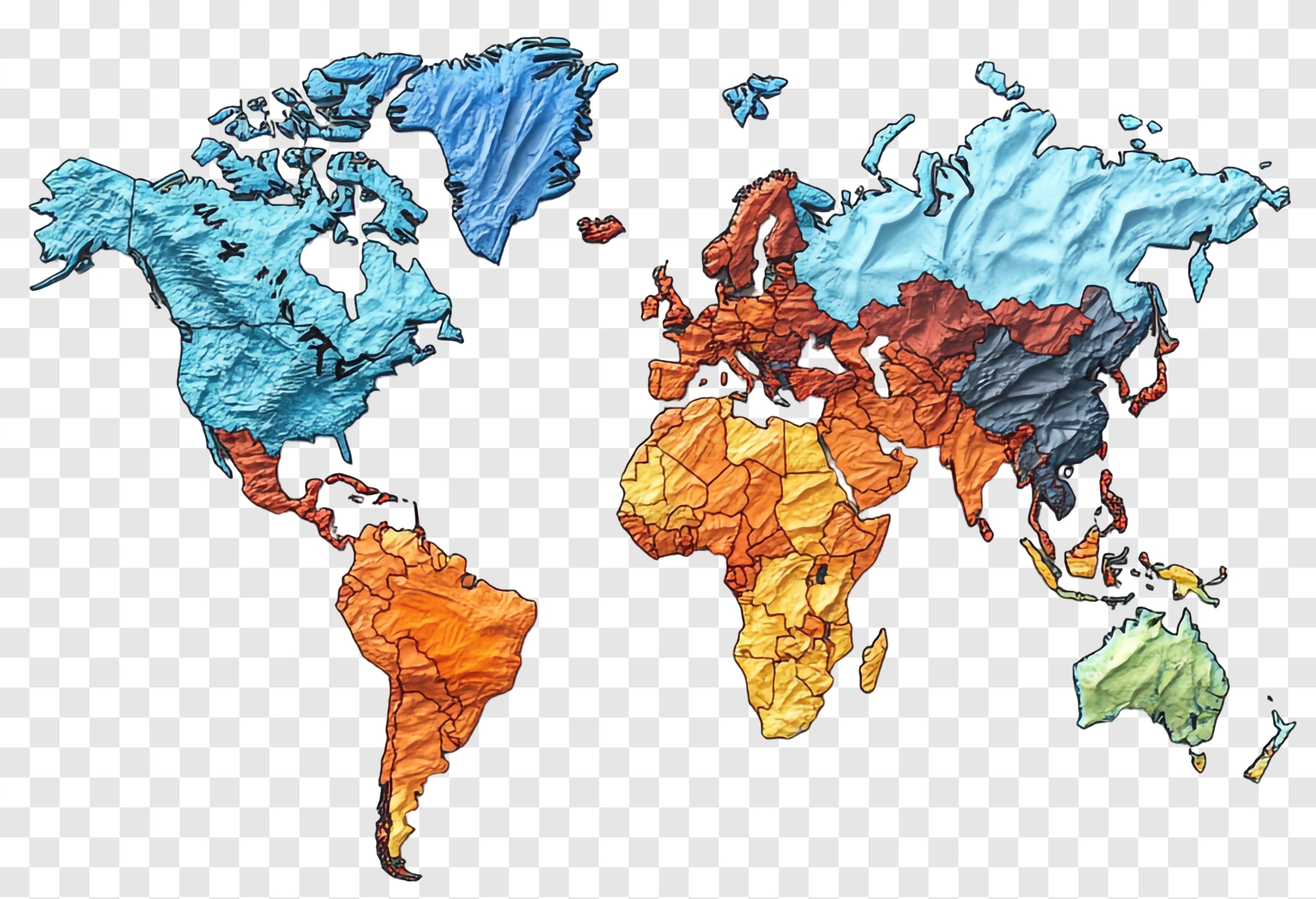
We have entered the age of human geography. It is a dynamic and ever-evolving discipline that explores the complex relationship between people, places, and the environment. It seeks to understand how human societies develop, organize space, interact with nature, and shape the world around them. This lecture series aims to provide a comprehensive introduction to the fundamental themes of human geography, equipping students with the analytical tools needed to examine global patterns, regional differences, and the challenges of an interconnected world.
This course covers a broad range of topics, beginning with an introduction to the core principles of human geography before delving into key areas such as population dynamics, cultural landscapes, economic development, urbanization, political structures, and environmental sustainability. We will explore the forces driving globalization, the impacts of climate change, and the role of human decision-making in shaping landscapes and societies.
Throughout this lecture series, students will engage with real-world case studies, interactive discussions, and critical thinking exercises to connect theory with practice. The goal is to foster a deeper understanding of the spatial organization of human activities and their consequences at local, national, and global scales.
As we embark on this academic journey, I encourage students to approach each topic with curiosity and a critical mindset. Human geography is not just a subject of study—it is a lens through which we can better understand the challenges and opportunities of our world today.
This lecture is for the readers who want to analyze, visualize and model geographic data with open source software. It is based on R that has powerful data processing, visualization and geospatial capabilities. The lecture is divided into two sections:
- Section 1: Foundations of human geography
- Section 2: Elegant geographic plots in R
Geo-computation with R will equip you with knowledge and skills to tackle a wide range of issues, including those with scientific, societal and environmental implications, manifested in geographic data.
Lectures
- Lecture 1: Introduction to human geography
- Lecture 2: Population and health geography
- Lecture 3: Global inequality and development
- Lecture 4: Cultural geography: Language, religion and identity
- Lecture 5: Political geography: States and geopolitics
- Lecture 6: Urban geography: Cities, infrastructure and planning
- Lecture 7: Human geography lab 1
- Lecture 8: Economic geography: Trade and globalization
- Lecture 9: Human geography lab 2
- Lecture 10: Environmental geography: Resources and sustainability
- Lecture 11: Human geography lab 3
- Lecture 12: Agricultural geography: Food production and land use
- Lecture 13: Human geography lab 4
- Lecture 14: Industrial geography: Industry and trade
- Lecture 15: Human geography lab 5
Textbooks:
- Rubenstein, J. M. (2010). Contemporary human geography. 5th edition. Pearson.
- Fouberg, E., Murphy, A., and De Blij, H. (2020). Human geography: People, place and culture. 12th edition. Wiley.
- Lovelace, R., Nowosad, J., and Muenchow, J. (2019). Geocomputation with R. CRC Press.
- Comber, L., and Brunsdon, C. (2020). Geographical data science and spatial data analysis: An Introduction in R. Sage.